If you’re planning a wider Zion trip or want a full overview of the park’s regions, entrances, and best hikes, my Zion National Park: Complete Hiking & Planning Guide is a great place to start.
Zion Traverse Day 3: Backpacking to Angel’s Landing and the West Rim
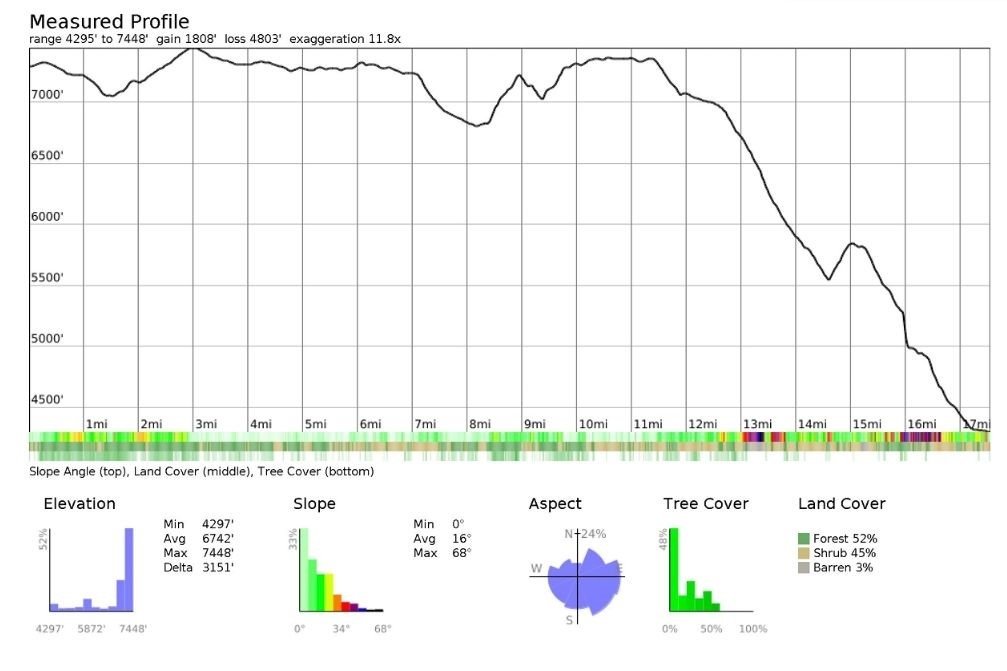
This was the day I’d been waiting for — the chance to backpack Zion Traverse to Angel’s Landing, reaching Scouts Overlook and the West Rim before the day‑hiker crowds. Wildcat Canyon was calm and cool in the early light, the air still holding the night’s chill. Sunrise poured over the ridgelines in slow gold, igniting the sandstone walls and giving the canyon floor a warm, shifting glow.
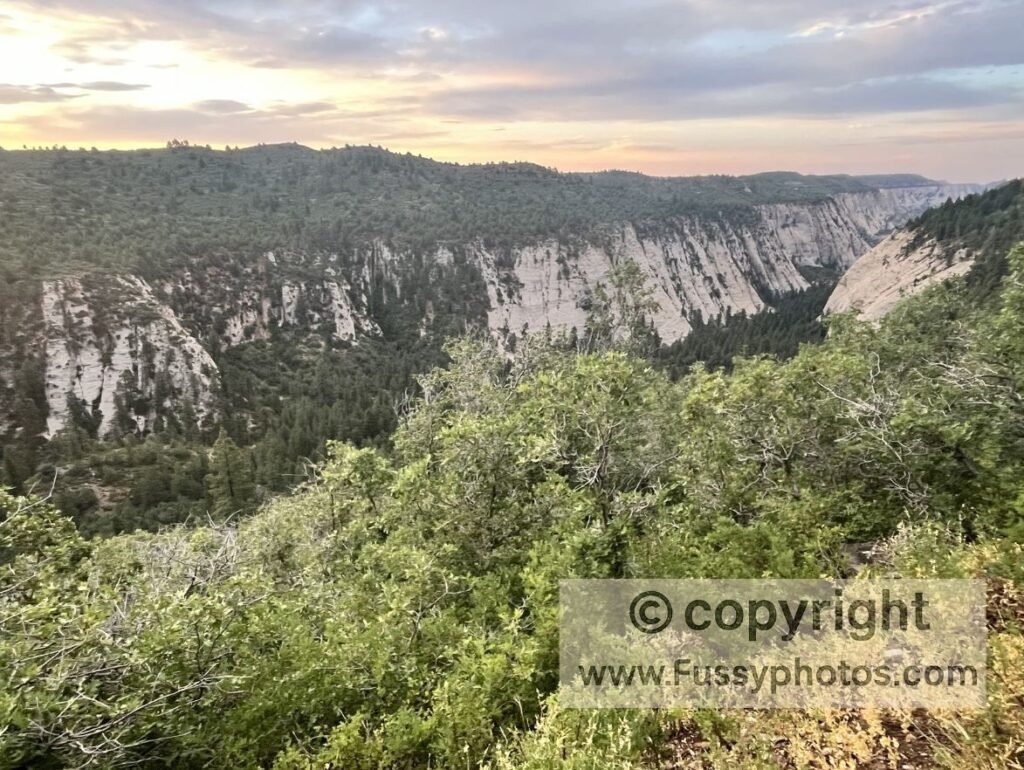
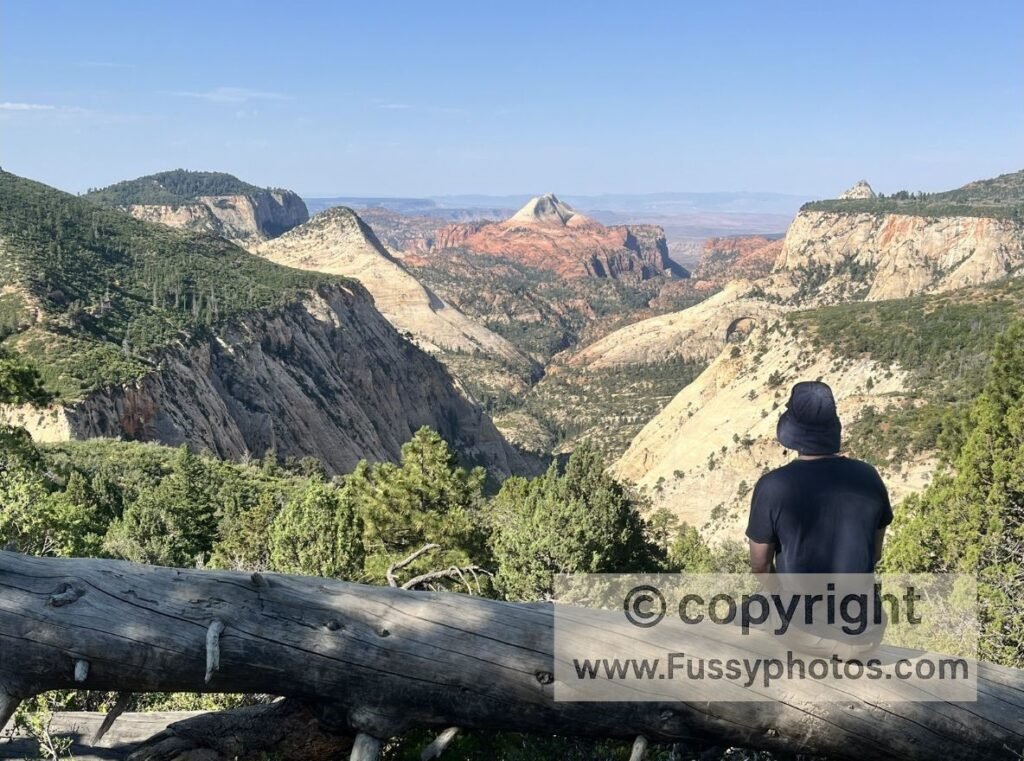
The West Rim Trail began generously, offering swift, effortless miles and long‑range views, broken only by occasional lookouts peering west into the wilderness of mesas and distant ridges. I believe we were looking out over canyoneering territory but from here hiking looked possible and it’s a shame there’s no trails over there.
Summer Challenges: Heat and Unreliable Springs
Temperatures were manageable until after Potato Hollow Spring, followed by a long, tiring climb. In hindsight, camping just beyond this area — around campsite 5 — would have allowed more time to enjoy it. But in summer, with unreliable springs, water supply dictates the itinerary. If you’re planning a summer Traverse, my Zion Traverse Water Safety Guide explains how each spring behaves in hot conditions and what you can realistically rely on between Potato Hollow, Wildcat Canyon, and the West Rim.
Spectacular Scenery on the West Rim Trail
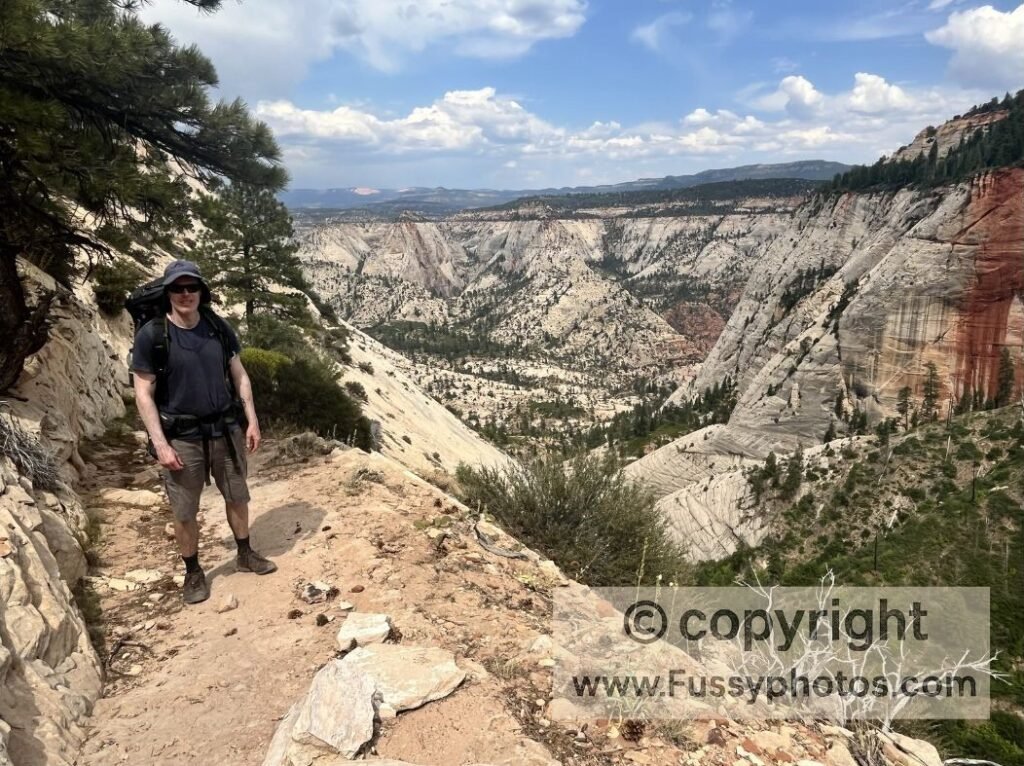
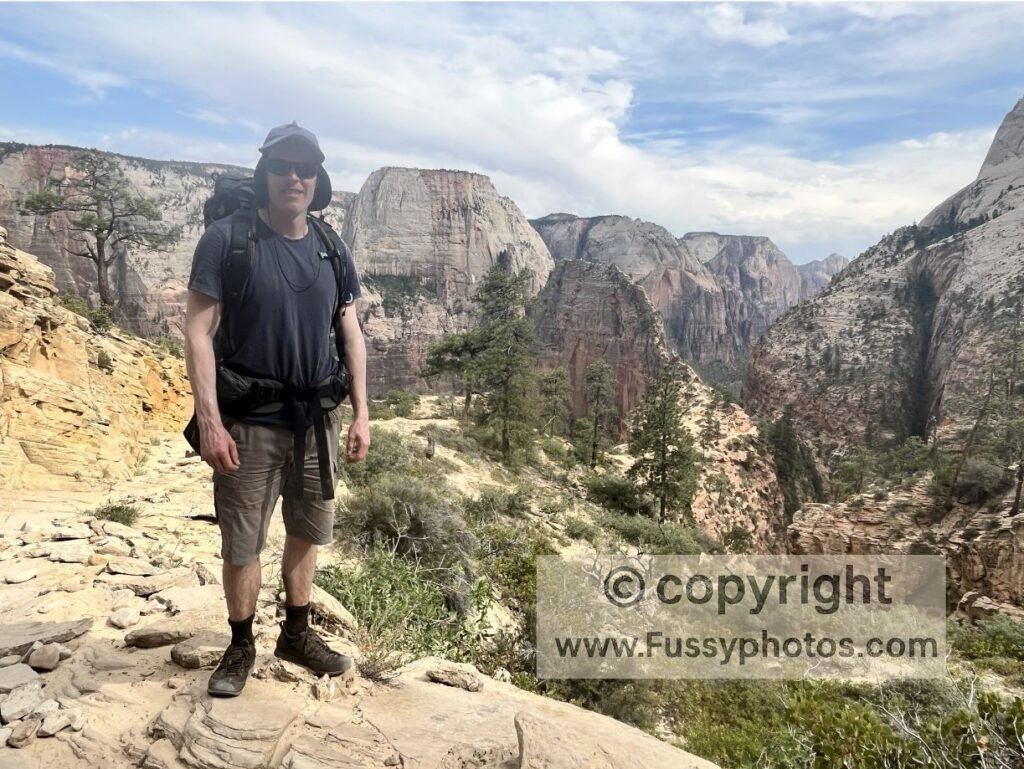
That afternoon brought some of the most spectacular western scenery I’ve ever experienced. Tired, we opted out of Angel’s Landing — we didn’t trust our legs on those narrow, high-exposure ledges. The descent from Angel’s Landing to the Grotto remains one of the most specular trails I’ve hiked – switchbacks folding into sheer walls. Despite our thirst, we couldn’t resist cooling off in the Virgin River before catching the shuttle back to our car.
If you’re interested in hiking the West Rim as a standalone trip — or want a full comparison of the top‑down and bottom‑up routes — my West Rim Trail: Top‑Down vs Bottom‑Up guide goes into all the details.
How to Backpack the Zion Traverse (Part 2): Wildcat Canyon to Angel’s Landing via West Rim Trail

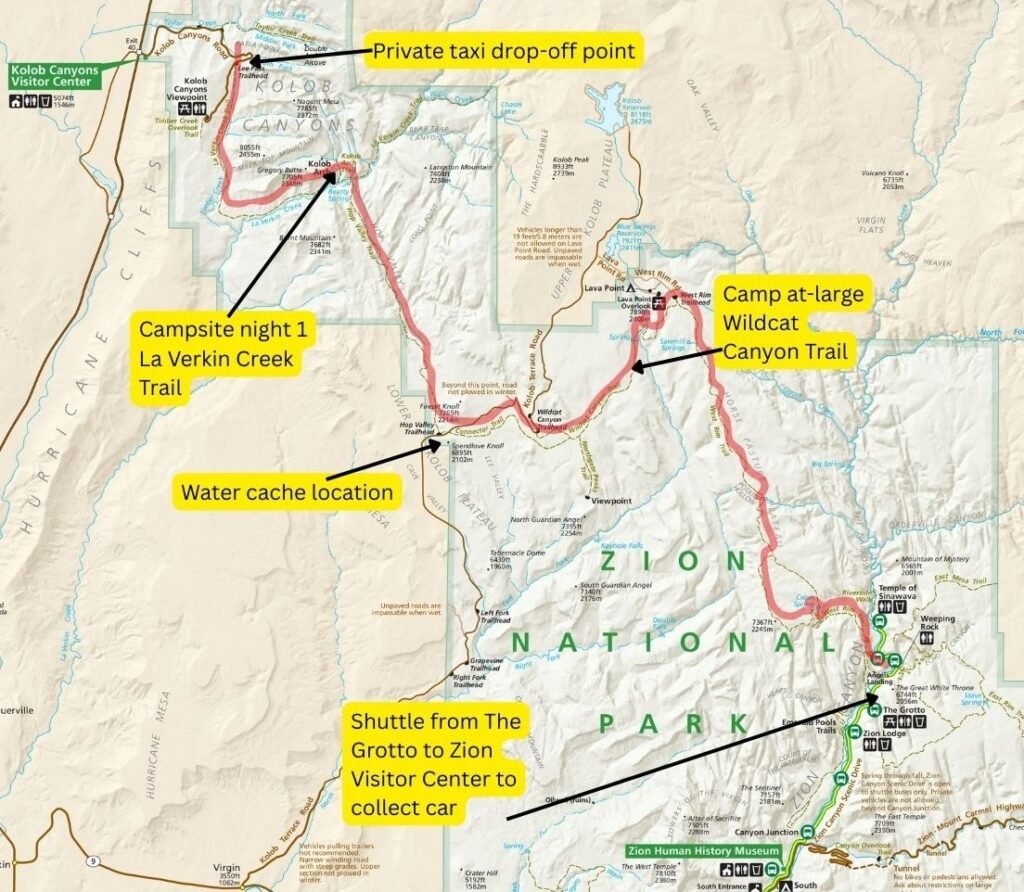
Backpack Zion Traverse to Angel’s Landing: Annotated Trail Map
Day 3 Elevation Profile: Wildcat Canyon to Angel’s Landing and The Grotto
Zion Traverse Gear List
Navigation & Planning
- Zion topo map (with Kolob Canyons, Hop Valley, West Rim overlays)
- GPS device or app (offline maps, trail junctions, water sources)
- Permit printout or digital copy (for backcountry camping)
- Route notes with water cache locations: Hop Valley TH, West Rim TH
- Shuttle schedule + trailhead logistics (for Kolob drop-off and Grotto pickup)
Water & Hydration
- Hydration bladder (2–3 liters) — for long dry stretches like Hop Valley
- Collapsible water bottles — for cache pickup and flexibility
- Electrolyte tablets or powder — essential for sandy climbs and midday heat
- Water purification method — for Beatty Spring or Potato Hollow backup
- Water cache containers — labeled and stashed at Hop Valley and West Rim trailheads
Footwear & Clothing
- Trail runners or lightweight hiking boots — with grip for sand, rock, and switchbacks
- Gaiters — for sandy terrain in Hop Valley and Wildcat Canyon
- Breathable hiking shirt + sun sleeves
- Hiking pants
- Wide-brim hat or cap with neck cape
- Buff or bandana — for dust, sun, and cooling
- Lightweight rain shell — for storm risk near Northgate Peaks
- Extra socks — for river crossings and sweat management
Shelter & Sleep
- Ultralight tent
- Sleeping pad — insulated for rocky or sandy terrain
- Lightweight sleeping bag or quilt — rated for desert nights
- Groundsheet or footprint
Cooking & Food
- Compact stove + fuel
- Lightweight cook pot
- Long-handled spoon or spork
- Dehydrated meals + snacks — pasta, sugary treats, nuts, jerky
- Bear-proof food bag or canister
- Lighter + backup firestarter
Safety & Essentials
- First aid kit — include blister care, rehydration salts, and heat-related items
- Headlamp + spare batteries
- Multi-tool or knife
- Emergency whistle
- Small mirror or signal device
- Personal locator beacon (PLB) or satellite messenger
Zion Traverse FAQs
How long is the Zion Traverse?
The full Zion Traverse is about 37 miles, linking Kolob Canyons to Zion Canyon, via Angel’s Landing. Most hikers complete it in 3–4 days, depending on pace and conditions.
Do I need a permit for the Zion Traverse?
Yes. Backcountry permits are required for overnight trips in Zion National Park. You’ll need to reserve campsites or obtain a wilderness permit for at‑large camping in designated zones, for example Wildcat Canyon.
What is the best time of year to hike the Zion Traverse?
Spring and fall are the most popular seasons, offering cooler temperatures and more reliable water sources. We hiked it in summer, when conditions are extremely hot, though permits tend to be less competitive at that time of year. In winter, snow and ice often cover the higher elevations. Permits are available on recreation.gov – type Zion National Park Overnight Wilderness Permits into the search box.
Where can I find water along the Zion Traverse?
Water sources along the Zion Traverse include Beatty Spring, Wildcat Canyon Spring, Sawmill Springs, and Potato Hollow Spring. Always check with a ranger about the reliability of these sources before your hike. We cached water at the Connector Trail trailhead to supplement natural supplies, and were glad we did, since some springs were dry or too silty. This approach requires extra planning and driving to set up cache locations before your hike.
Can I cache water using the shuttle system?
No. The shuttle only serves Zion Canyon. If you plan to cache water at trailheads like Hop Valley or Connector Trail, you’ll need to drive there yourself before your hike. This requires extra planning and time.
How difficult is the Hop Valley Trail section?
Hop Valley has deep sand, cattle tracks, and little shade. It’s one of the slowest and most energy‑sapping sections of the Traverse. Despite being only 6.5 miles long, it took us 4–5 hours to complete.
You could skip this trail entirely, but that would also mean skipping La Verkin Creek Trail and beginning a shortened Traverse from the Connector Trail.
Can I camp anywhere along the Zion Traverse?
Camping is allowed only in designated sites or wilderness zones with a permit. La Verkin Creek and The West Rim Trail have numbered sites, while Wildcat Canyon allows at‑large camping with restrictions.
Does the Zion Traverse include Angel’s Landing?
Yes, our permit included Angel’s Landing. The Traverse ends at The Grotto in Zion Canyon, and many hikers add the Angel’s Landing climb as a finale, though we decided not too.
How do I get to the starting point of the Zion Traverse?
Most hikers begin at Lee Pass Trailhead in Kolob Canyons. It’s accessible by car from Interstate 15, but there is no public shuttle service to this trailhead. You’ll need to arrange your own vehicle or a private drop‑off. Local shuttle companies can provide this service for a fee.
Is there a shuttle that connects Kolob Canyons to Zion Canyon?
No. The park shuttle only serves Zion Canyon. To link the start and end of the Traverse, hikers usually set up a car shuttle (leaving one vehicle at Zion Canyon Visitor Center and driving another to Lee Pass) or hire a private shuttle service from Springdale.
How Zion National Park Fits into a Southwest Road Trip
Zion National Park is a natural hub for exploring the American Southwest, with easy access to both iconic Utah parks and neighboring states:
- Bryce Canyon National Park is the closest of Utah’s “Big 5,” located just 2 hours northeast. From there, the natural route continues to Capitol Reef National Park, followed by either Arches National Park or Canyonlands National Park, both around 4.5 hours northeast of Zion.
- Heading southwest, Las Vegas is just over 2 hours away, making it a convenient entry or exit point for your trip.
- The Grand Canyon is about 3 hours away—though reaching the South Rim takes longer depending on your route.
- Heading northwest, Great Basin National Park in Nevada is approximately 2.5 hours away, offering a quieter contrast to Zion’s dramatic cliffs.
Whether you’re chasing red rock vistas or crafting a full Utah Big 5 itinerary, Zion slots perfectly into a multi-day adventure across the Southwest.
Discover More Zion National Park Adventures
Browse all Zion guides, including the Zion Traverse, West Rim Trail, Observation Point, Kolob Canyons routes, and practical planning advice for every region of the park.