Here’s everything you need to plan your visit, from the best seasons and trailheads to top hikes, camping options, and essential logistics.
Rising from the Chihuahuan Desert, the Guadalupe Mountains are home to Texas’s highest peak, ancient fossil reefs, and some of the most rugged, rewarding trails in the Southwest. This is a park for those who love big climbs, big skies, and solitude.
Best Time to visit Guadalupe Mountains NP
- Fall: Famous for McKittrick Canyon’s fiery foliage
- Spring: Wildflowers and mild temperatures
- Summer: Hot but achievable with early starts. Temperatures decrease with altitude. Front country campgrounds like Pine Springs Campground are at lower elevations and are hot during the day with little shade. Less crowds than other seasons.
- Winter: Crisp air, fewer crowds, snow-dusted peaks
How to get to Guadalupe Mountains NP
- Nearest City: El Paso, TX (110 miles)
- Other Gateways: Carlsbad, NM; Midland, TX
- No Shuttle Service: You’ll need your own vehicle. Point-to-point hikes are particularly tricky to arrange with a second vehicle due the lack of proximity to a nearby urban area. For this reason I planned an out-and-back hike, starting and returning to McKittrick Trailhead
Maps & Orientation
For detailed trailhead locations, campground areas, and driving access points, you can view the official Guadalupe Mountains National Park maps on the NPS website.
Top Things to Do in Guadalupe Mountains National Park
Hike to Guadalupe Peak — “The Top of Texas”
The park’s most iconic trail climbs 3,000 feet to the 8,751‑foot summit of Guadalupe Peak. The route is steep but well‑engineered, with panoramic views of the Chihuahuan Desert and the sheer limestone face of El Capitan.
Best for: Strong hikers, sunrise/sunset missions, peak‑baggers.
Explore McKittrick Canyon — the Park’s Scenic Heart
McKittrick Canyon is famous for its autumn foliage, but it’s beautiful in every season. The trail to Pratt Cabin is gentle and family‑friendly; continuing to The Grotto adds limestone formations and shaded picnic tables. …For more challenge, the canyon connects to high‑country trails such as the McKittrick Ridge Trail, one of the toughest hikes in Texas and the focus of my full McKittrick Ridge Trail backpacking guide.
Best for: Families, photographers, fall visitors.
Wander the Salt Basin Dunes
On the park’s remote western edge, white gypsum dunes rise against the dark cliffs of the Guadalupe escarpment. It’s a quieter part of the park with huge skies, soft light, and a sense of solitude you won’t find near Pine Springs.
Best for: Photographers, families, sunset lovers, solitude seekers.
Visit Frijole Ranch and Its Short Trails
This historic ranch sits near the base of the mountains and serves as a gateway to several short hikes, including the Smith Spring Trail — a surprising oasis tucked beneath the desert cliffs.
Best for: History buffs, families, easy half‑day outings.
Take a Scenic Drive for Views of El Capitan and Guadalupe Peak
Several roadside pull‑offs along US‑62/180 offer classic views of the park’s most dramatic peaks. The El Capitan Viewpoint and Guadalupe Peak Viewpoint are quick stops with big photographic payoff.
Best for: Road‑trippers, low‑effort sightseeing.
Explore the Remote Dog Canyon District
Dog Canyon sits on the park’s northern edge, far from crowds and surrounded by high‑desert forest. Trails here are cooler, quieter, and less steep than those near Pine Springs, and the district is especially convenient for visitors arriving from the north side of the park.
Best for: Summer visitors, solitude seekers, hikers who prefer cooler temperatures.
Start Your Adventure at Pine Springs
Pine Springs is the main trailhead hub for the park’s high‑country routes, including Guadalupe Peak, Devil’s Hall, and the Bowl. Even a short walk from the trailhead gives you a feel for the desert landscape.
Best for: First‑time visitors, hikers of all levels.
Learn the Park’s Essentials at the Visitor Centers
The Pine Springs, McKittrick Canyon, and Dog Canyon visitor centers offer exhibits, trail information, water refills, and ranger guidance. They’re also the only reliable water sources in the park.
Best for: Trip planning, families, first‑timers.
Best Hikes in Guadalupe Mountains NP
From near the Pine Springs Campground:
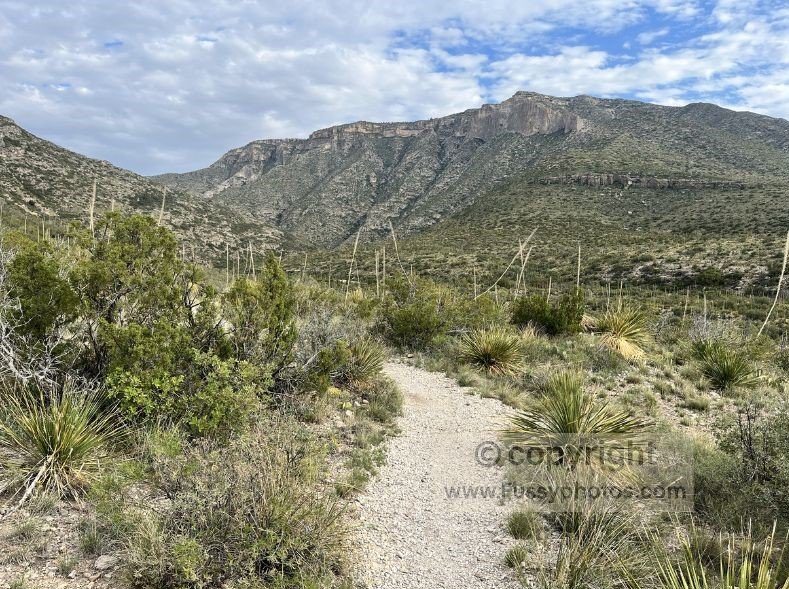
- Devil’s Hall Trail — 4‑mile out‑and‑back through a narrow canyon via a dry river wash
- Guadalupe Peak Trail — strenuous 8.5‑mile out‑and‑back to the highest point in Texas (8,751 feet)
From the McKittrick Canyon Trailhead:
McKittrick Ridge Trail — strenuous climb gaining 2,380 feet in just 2 miles, ending at McKittrick Ridge Campground and connecting to the Tejas Trail (with links to Dog Canyon and much of the Guadalupe Mountains Wilderness)
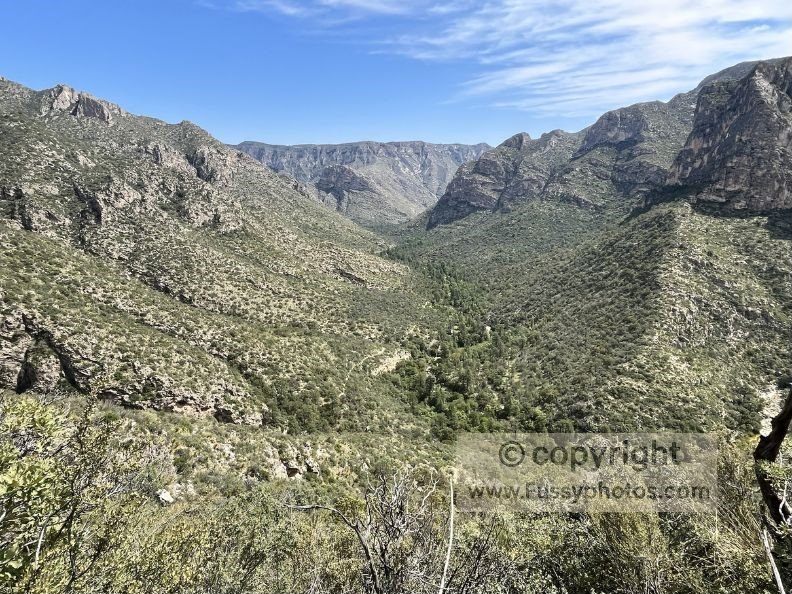
Pratt’s Cabin — flat 4.5‑mile out‑and‑back hike along McKittrick Canyon
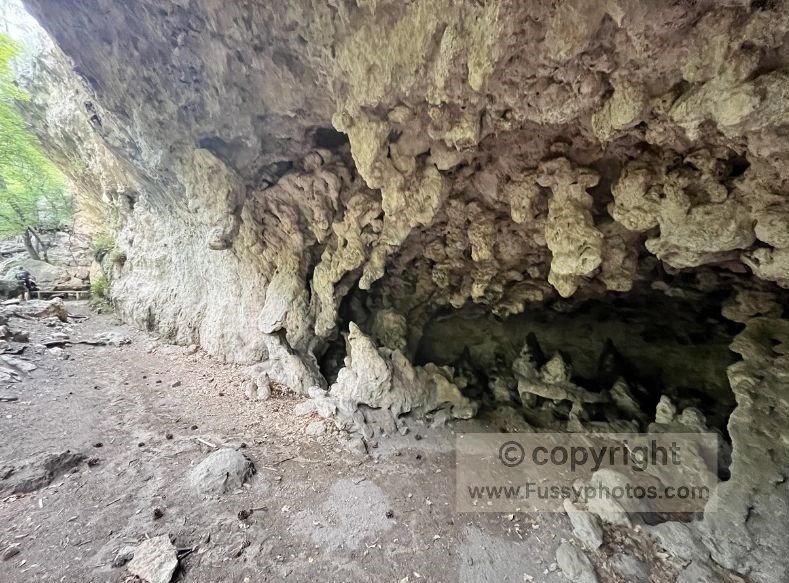
The Grotto — 8‑mile out‑and‑back extension from Pratt’s Cabin
Camping & Lodging near Guadalupe Mountains NP
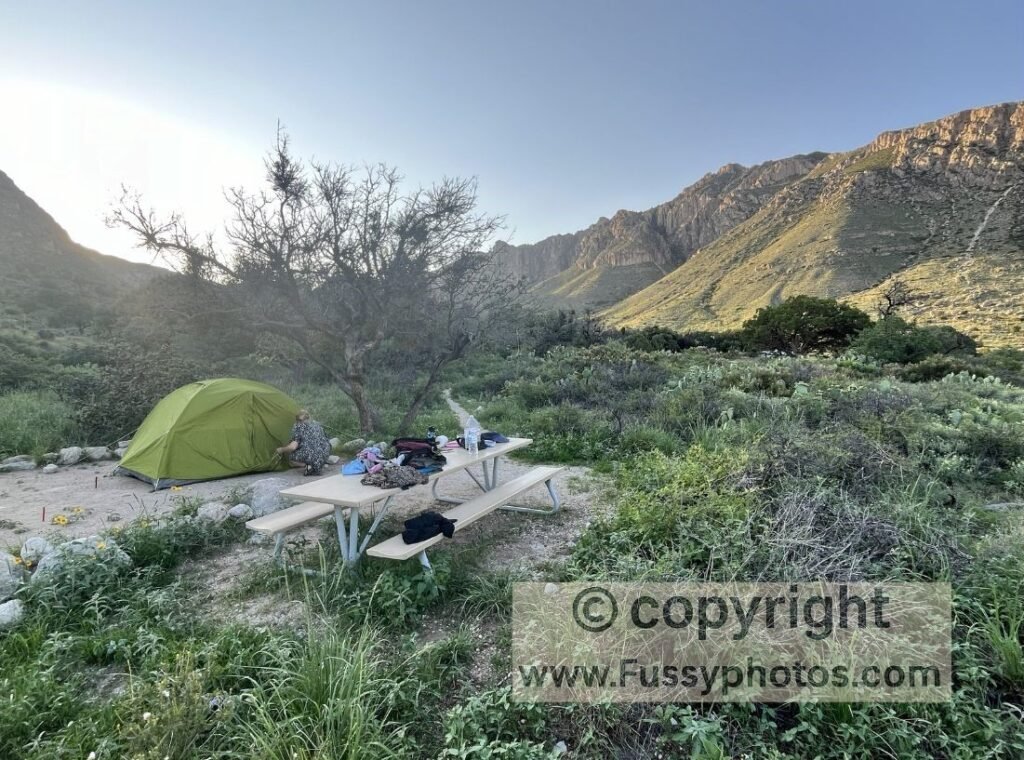
- Pine Springs Campground: Main developed campground near the visitor center
- Dog Canyon Campground: Higher elevation, cooler temps, and quieter setting. The higher elevation makes for a more comfortable hike into the backcountry. However, this is a remote campsite however and requires considerably more driving if approached from El Paso.
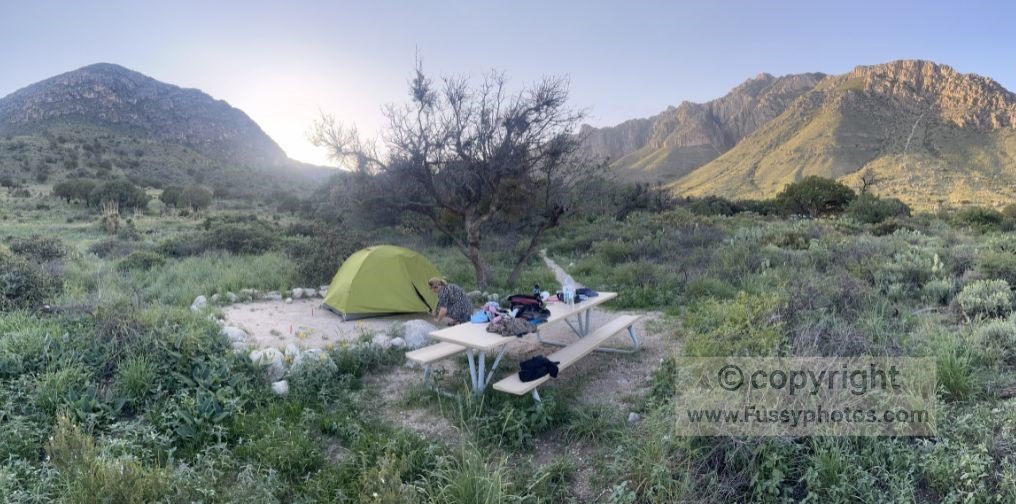
- Backcountry Sites: Permit required. We stayed at McKitterick Ridge Wilderness Campsite.
- Nearby Lodging: Carlsbad, NM is around 45-60 minutes away.
Wilderness Permits for Guadalupe Mountains National Park
Overnight trips in the Wilderness require a permit year‑round, and it must be obtained before beginning your backpacking journey. Wilderness permits are issued in person at the Pine Springs Visitor Center. We found them easy to secure in advance for a summer visit, but they become more competitive in spring or during the fall foliage season, especially around McKittrick Canyon.
Wildlife & Nature
Flora: Desert agave, yucca, ponderosa pine, Douglas fir
Mammals: Mule deer, elk, mountain lions (rarely seen)
Birds: Golden eagles, peregrine falcons, canyon wrens
Reptiles: Collared lizards, western diamondback rattlesnakes
How to Explore Guadalupe Mountains FAQs
With the basics covered, here are answers to the most common questions visitors have before exploring the park.
What is the best time to visit Guadalupe Mountains National Park?
Fall is famous for fiery foliage in McKittrick Canyon, spring brings wildflowers and mild temperatures, summer is hot but manageable with early starts, and winter offers crisp air, fewer crowds, and snow‑dusted peaks.
What are the best hikes in Guadalupe Mountains National Park?
Highlights include Devil’s Hall Trail, Guadalupe Peak Trail to Texas’s highest summit, Pratt Cabin, The Grotto, and the strenuous McKittrick Ridge Trail, often called the toughest hike in Texas. My trip report covers Pratt Cabin, The Grotto, and McKittrick Ridge Trail in one backcountry trip.
Where can I camp in Guadalupe Mountains National Park?
Front‑country options include Pine Springs Campground near the visitor center and Dog Canyon Campground at higher elevation. Backcountry sites like McKittrick Ridge Wilderness Campground require a permit.
Is water available on trails in Guadalupe Mountains National Park?
No. Water is not available along trails. The only reliable refill points are the three visitor centers: Pine Springs, McKittrick Canyon, and Dog Canyon. Consider caching water where possible before starting.
How do I get to Guadalupe Mountains National Park?
The nearest city is El Paso, about 110 miles away. Other gateways include Carlsbad, NM and Midland, TX.
Are there bears in Guadalupe Mountains National Park?
Black bears are occasionally reported, but sightings are rare. The park ranger told us not to worry about seeing any (summer). More common encounters include mule deer, hawks, and smaller mammals.
What is the closest town to the Guadalupe Mountains?
Carlsbad, New Mexico is about 45–60 minutes away. El Paso, Texas is the nearest major city.
How much time do you need to see Guadalupe Mountains National Park?
A full day allows for short hikes like Devil’s Hall or McKittrick Canyon. Guadalupe Peak takes a full day. Two to three days are ideal for backpacking routes such as Guadalupe Peak or McKittrick Ridge.
Can you do Carlsbad Caverns and Guadalupe Mountains in one day?
The two parks are only about an hour apart, but visiting both in a single day is challenging. Each deserves at least a full day to explore without rushing. A practical option is to camp at Guadalupe Mountains and then make a day trip to Carlsbad Caverns before returning, but to truly enjoy both, plan for two days.
Is there a shuttle service in Guadalupe Mountains National Park?
No. The park does not operate a shuttle system. Visitors must use their own vehicle, and point‑to‑point hikes are difficult to arrange without a second car due to the park’s remote location.
How Guadalupe Mountains National Park Fits into a Southwest Road Trip
Guadalupe Mountains National Park is a strategic stop on any West Texas or Southwest itinerary, offering easy access to several major destinations:
- El Paso lies approximately 111 miles west—perfect for a half-day drive or airport connection.
- Carlsbad Caverns National Park is less than an hour east, making it an ideal companion destination for cave exploration and desert hiking.
- White Sands National Park, known for its dazzling gypsum dunes, is about 3 hours northwest by car.
- Chiricahua National Monument, a wonderland of balanced rocks and spires is 5.5 hours west.
For those planning a broader journey, heading west to Tucson or north to Albuquerque adds significant mileage but opens up a wealth of desert landscapes, cultural sites, and scenic drives across the Southwest.
For those wanting to go beyond the front‑country highlights, my McKittrick Ridge Trail backpacking guide offers a full deep‑dive into the park’s most challenging high‑country trail.