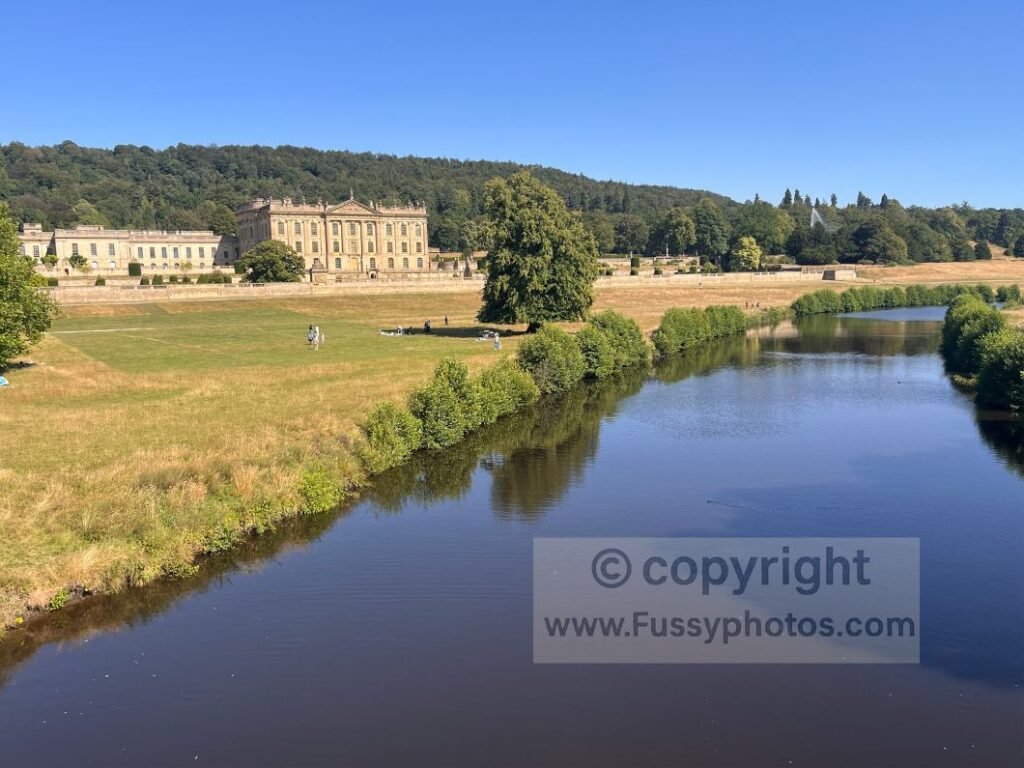
Chatsworth House is famous for its long history, its role as the seat of the Duke of Devonshire, and its appearances in films and television — but above all for its vast, sculpted parkland. This 6.2‑mile circular walk loops around the wider Chatsworth Estate, taking in The Hunting Tower, Emperor Lake, Paine’s Bridge, Queen Mary’s Bower, and an optional pub finish in Baslow.
The route offers a mix of woodland, quiet edges, open parkland and classic Peak District scenery — with long views across the Derwent valley and the sweeping lawns that make Chatsworth such a timeless English landscape.
Key Facts
- Distance: 6.2 miles
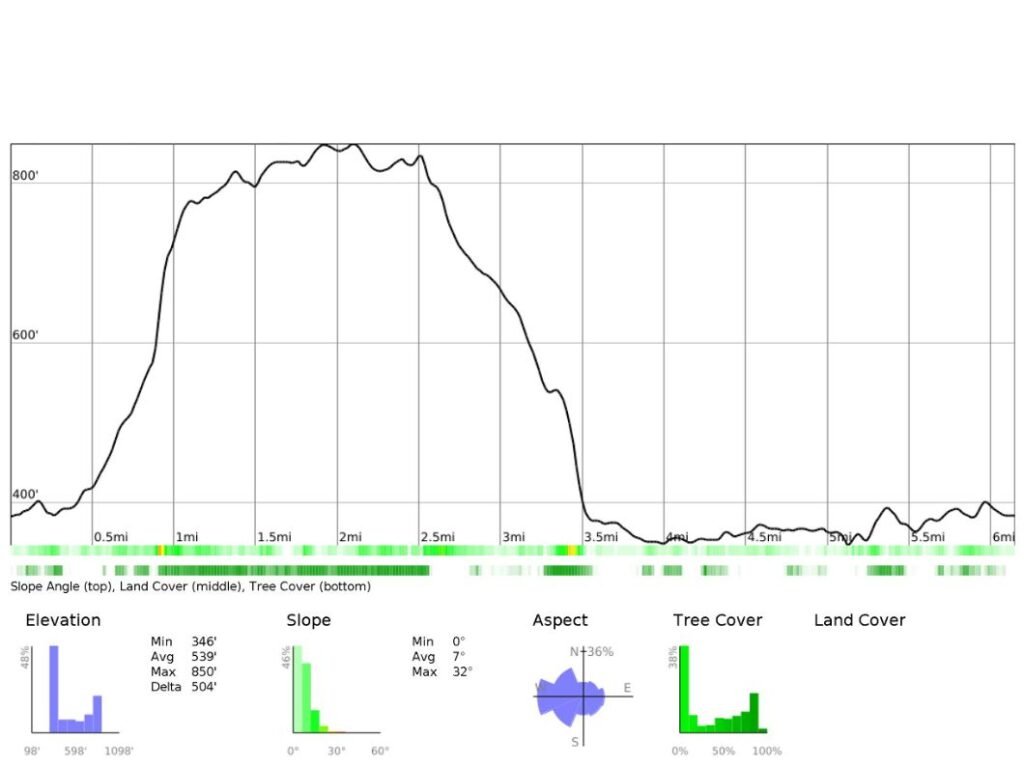
- Elevation gain: 216m
- Difficulty: Easy–Moderate — gentle gradients, clear paths, and straightforward navigation once on the Derwent Valley Heritage Way Family‑friendly: Suitable for families comfortable with a half‑day walk; plenty of open parkland, riverside sections and woodland interest, with no technical terrain
- Start/finish: Baslow (or parking available on the Chatsworth Estate)
- Highlights: The Hunting Tower, Emperor Lake, Paine’s Mill, Paine’s Bridge, Queen Mary’s Bower, riverside walking along the River Derwent, and sweeping views across the Chatsworth parkland
- Best for: A relaxed Peak District day out combining heritage, scenery and accessible trails
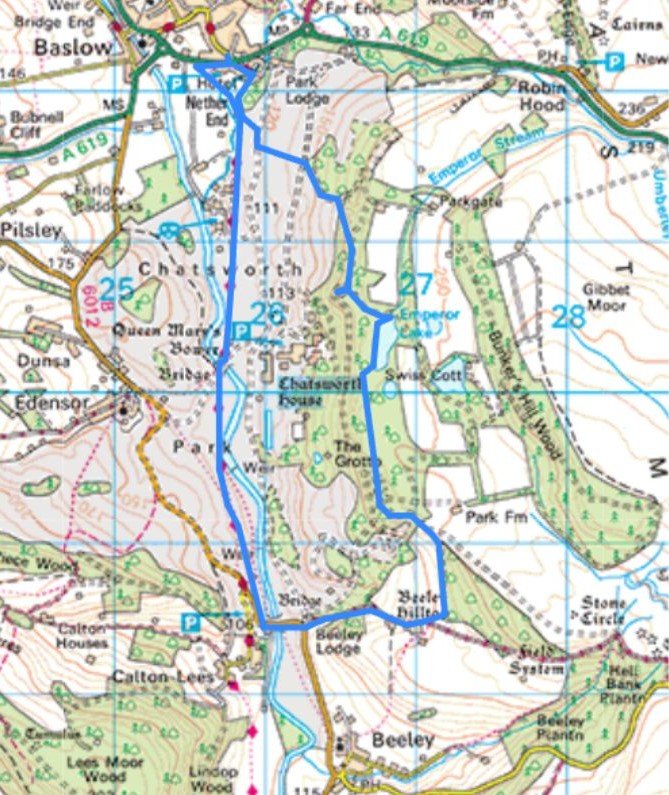
OS Map Extract
Elevation Profile
Watch & Listen to the Walk

Starting the Walk from Baslow
The most straightforward place to begin is Baslow, though you can start closer to Chatsworth House if you prefer. This description begins and ends in Baslow, walking the loop clockwise.
There are two main entry points into the northern side of the Chatsworth Estate:
- A trail from the west of The Cavendish Hotel
- The Derwent Valley Heritage Way, entering from just east of The Devonshire Arms
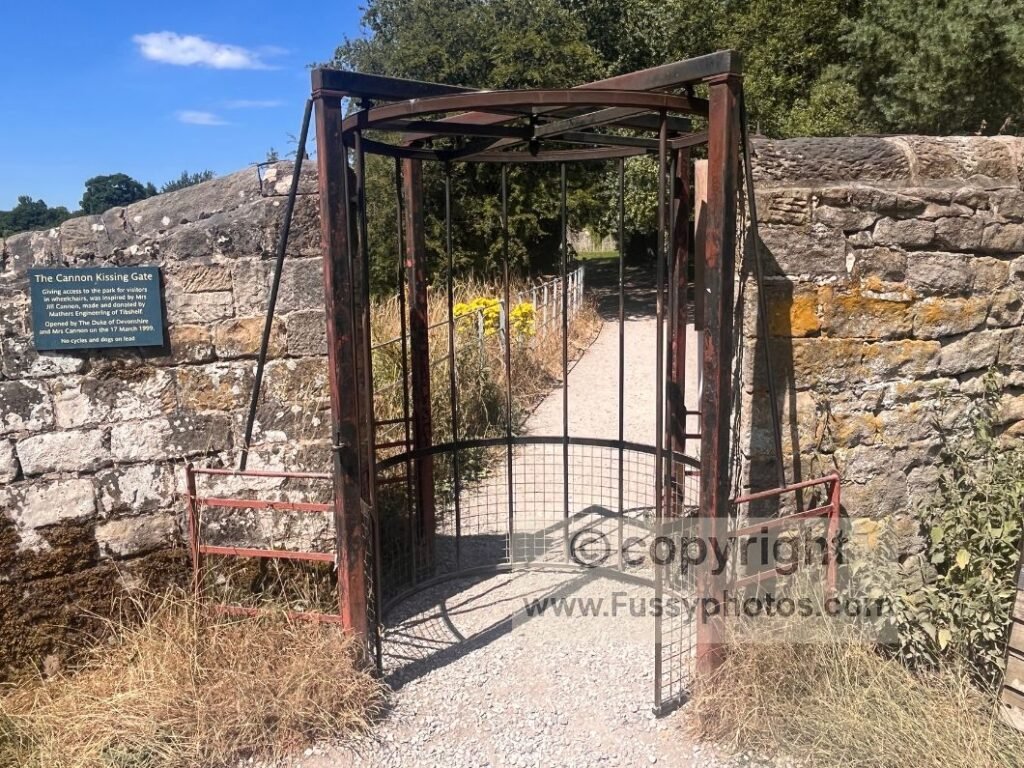
Both routes converge just north of The Cannon Kissing Gate.
Given the popularity of the area, we expected a busy trail — but the number of cars around Chatsworth Park Caravan and Motorhome Club still surprised us. We threaded through the vehicles on a faint southeast line towards Dobb Edge. There’s no signposting here, so a GPS or good sense of direction helps unless you’re happy to improvise.
The edge is reached across fields and through woodland. It’s a short, steady ascent to a junction with a wide gravel path leading directly to The Hunting Tower.
The Hunting Tower
Built in the sixteenth century as a vantage point for watching hunts across the Chatsworth Estate, the Hunting Tower is now one of Chatsworth’s most distinctive holiday cottages, offering panoramic views over the parkland and the surrounding Peak District.
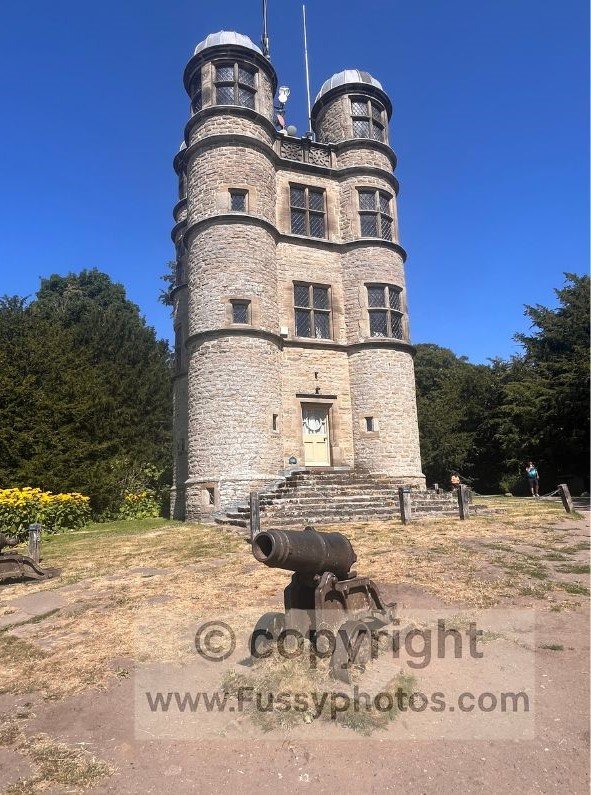
We paused for the obligatory photos of the tower and its cannons before continuing south through the woodland. Several trails leave the tower, and again there’s no signage — so take care to stay on your intended route unless you’re happy to wander.
Emperor Lake and Woodland Trails
After a short backtrack to find the correct trail, Emperor Lake appeared within five minutes. After a long dry spell, the eastern side had partially dried, but the loop around the lake remained pleasant, passing a bench before re‑entering denser woodland.
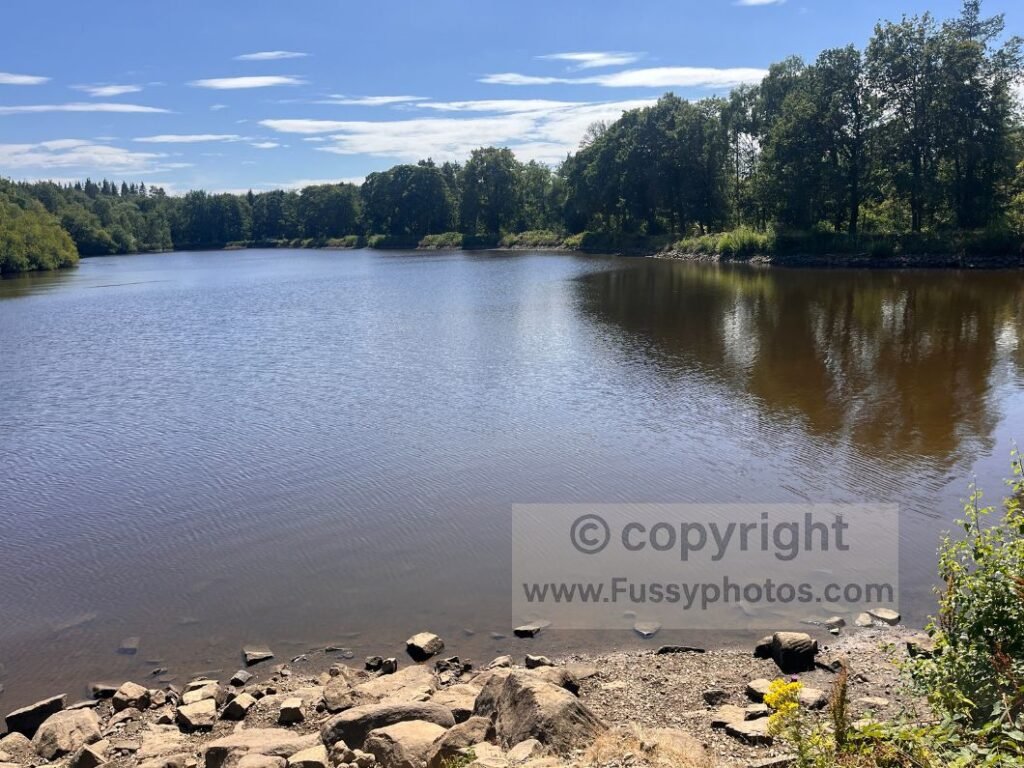
A wide, shaded north–south trail follows. Heading south, we passed an excellent viewpoint of Chatsworth House on a side trail — though a large group resting there meant no photos this time. Further along, a small clearing with a large stone seat offered partial views west across the valley.
Two Diverging Trails: Beeley Loop or Direct Path to Calton Lees
Soon the trail left the woodland and entered open bracken. Two clear options present themselves:
- Continue southeast towards Hell Bank Plantation and Beeley Brook, descending into Beeley before looping back north — adding around 2.3 miles
- Or take the shorter option (as we did) via an overgrown trail past Beeley Lodge, then follow a farm track to the B6012 and re‑enter the estate near a picturesque single‑arch stone bridge at Calton Lees
Approaching Chatsworth House via the River Derwent
Foot traffic increases dramatically here — any solitude from earlier in the walk quickly disappears. The trail crosses the bridge and turns north, running parallel to the River Derwent past Paine’s Mill.
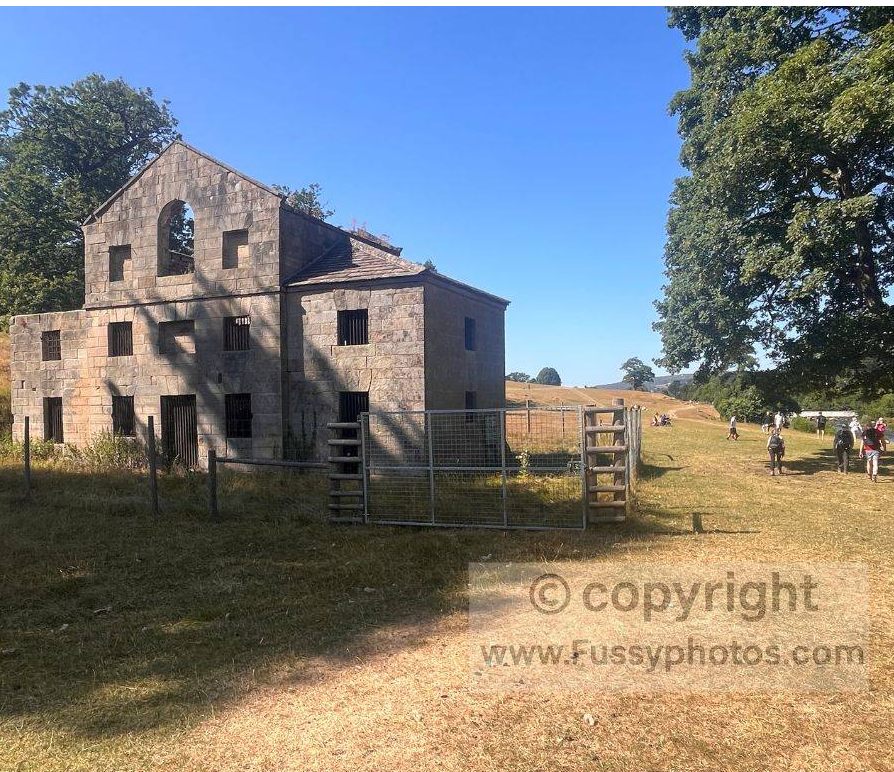
On a warm day, the riverside was busy, with people relaxing in the water. Navigation is easy: follow the river, pass two weirs, and soon Chatsworth House comes into view.
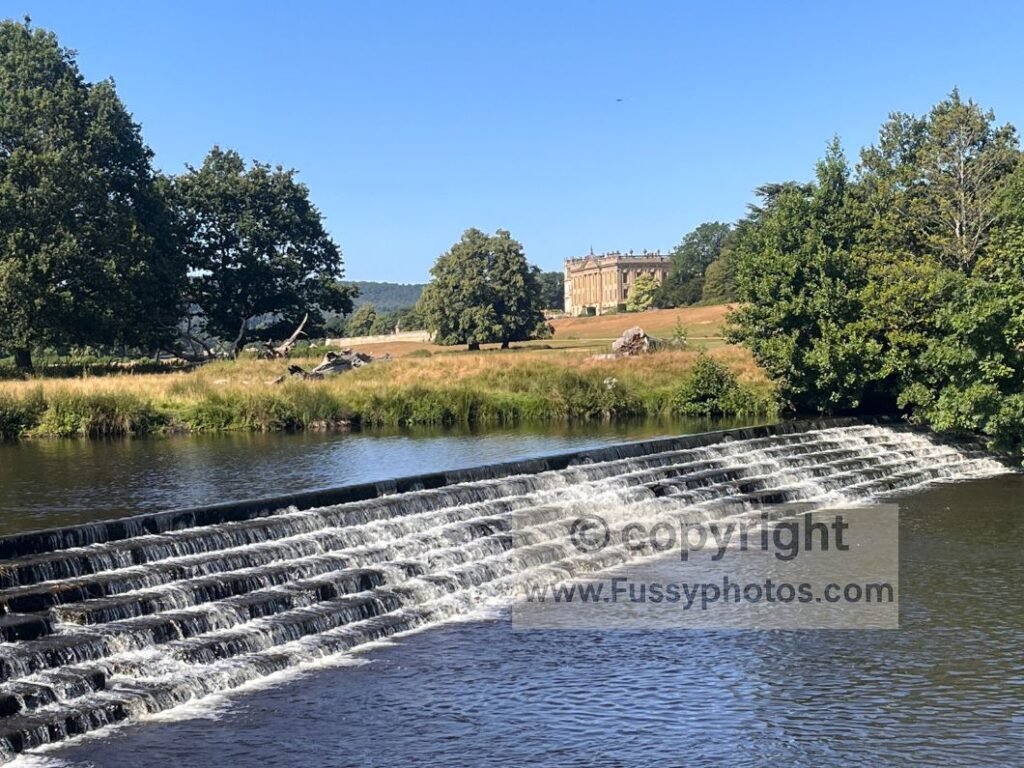
Paine’s Bridge
We stayed close to the riverbank for the best photos before crossing Paine’s Bridge — an impressive scene with the house framed perfectly across the lawns.
Queen Mary’s Bower
Unless you’re visiting the house or gardens, the trail to the left is signposted. It passes Queen Mary’s Bower, built in the 1570s to provide a raised exercise ground for Mary Queen of Scots during her captivity at Chatsworth.
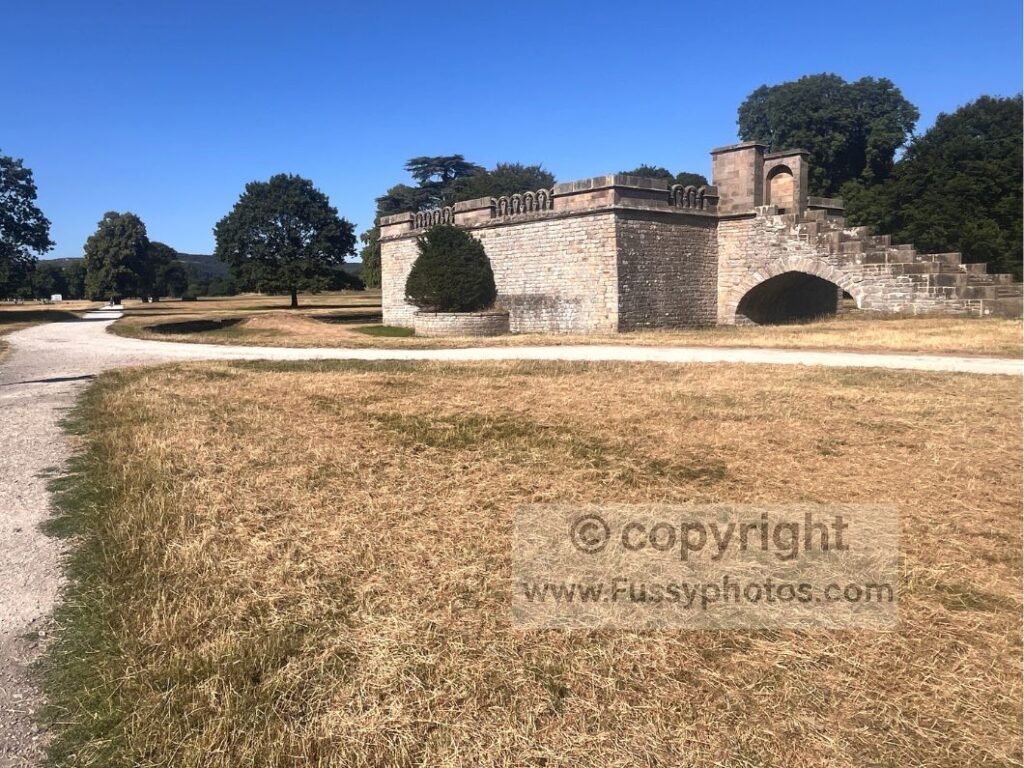
From here, the route crosses the flat parkland — over 1,800 acres of open space. Above, to the east, The Hunting Tower reappears on the skyline.
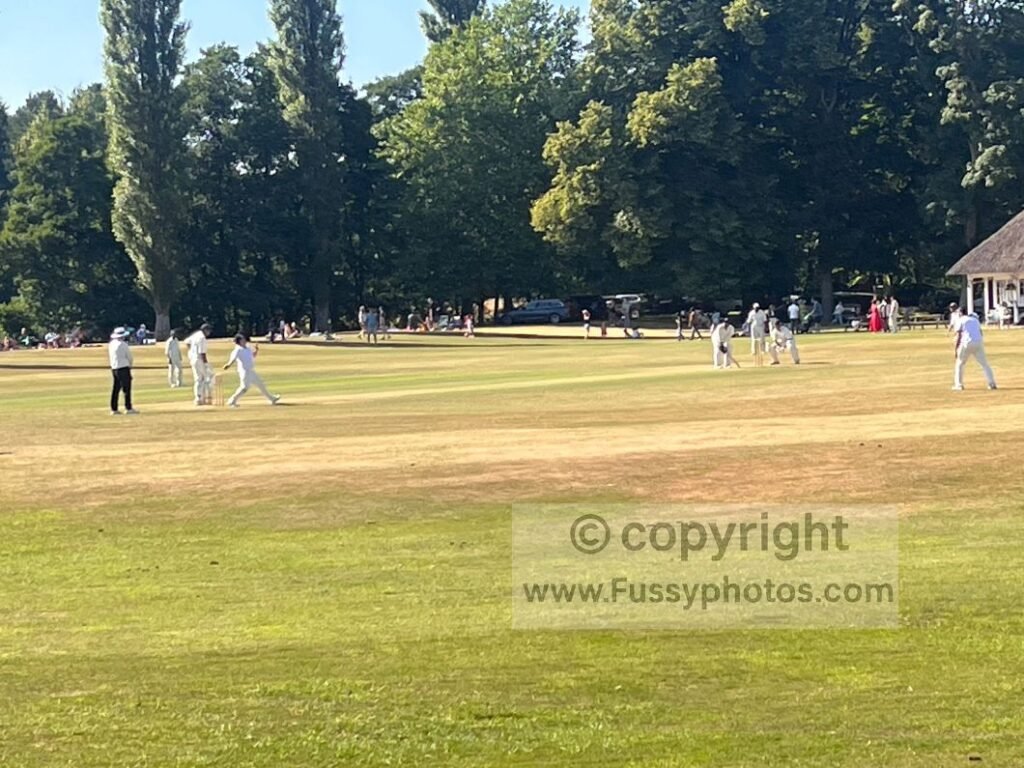
Chatsworth Cricket Club Ground
A cricket match was underway as we passed — a quintessentially English moment — and after witnessing three wickets in three balls, we continued northwards, following the easy path back into Baslow.
A fine end to an idyllic walk.
Nearby Peak District Walks
Dovedale Stepping Stones Circular
Walk the iconic Dovedale Stepping Stones Circular, a limestone‑gorge loop with Thorpe Cloud, riverside paths and classic River Dove scenery — one of the most famous routes in the White Peak.
Chrome Hill (Dragon’s Back) Circular
Explore the dramatic Dragon’s Back ridge on the Chrome Hill Circular, a scenic White Peak walk with quiet valleys, rolling farmland and unforgettable views over the River Dove.
Explore More Peak District Walks
If you’re planning your next route, take a look at my curated collection of the Best Peak District Walks — from dramatic ridge routes to peaceful riverside paths, all with maps, photos and clear navigation tips.